
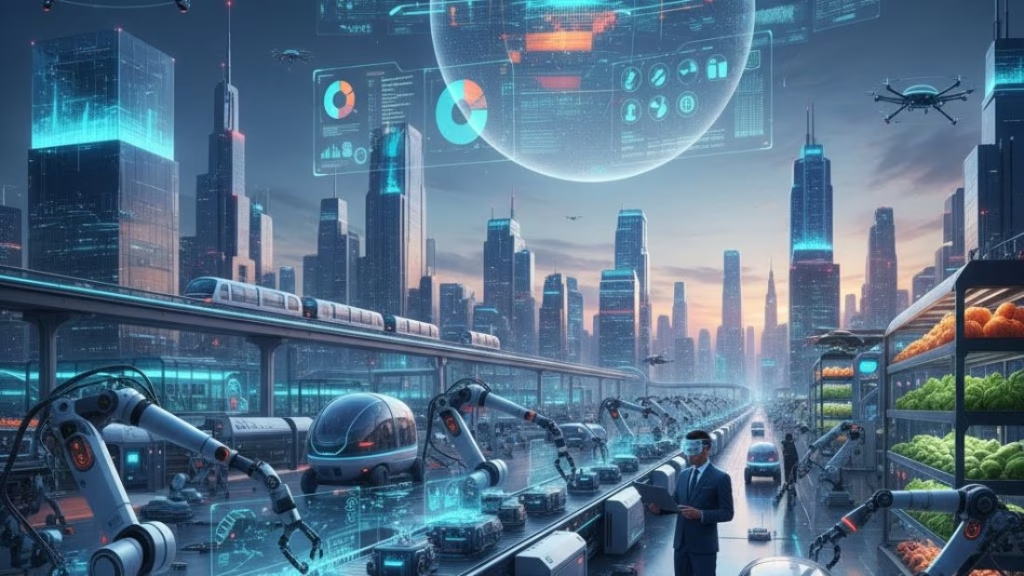
The future of automation and robotics is rapidly transforming industries worldwide. From the manufacturing sector to healthcare, robotics technology is driving unprecedented changes in how businesses operate. As automation and robotics continue to advance, they offer new opportunities and challenges that are reshaping the way we work and live. Let’s explore how these emerging technologies will impact industries and society in the coming years.
1. Collaborative Robots: Revolutionizing the Workforce
One of the key trends in the future of robotics is the rise of collaborative robots, or cobots. Unlike traditional industrial robots, which are often isolated from human workers, cobots are designed to work alongside people in shared environments. These robots are smaller, more flexible, and safer, with built-in sensors and AI to ensure smooth interaction with human employees.
Cobots are already being used in industries like manufacturing and logistics, where they assist with repetitive tasks like assembly, quality control, and packaging. The integration of cobots allows businesses to improve efficiency while also reducing workplace injuries by taking over strenuous or monotonous tasks. In this way, collaborative robots offer a safer and more productive work environment.
2. The Impact on Jobs: Automation and Employment

As robotics technology advances, concerns over job displacement are common. However, automation doesn’t necessarily mean fewer jobs—it means different jobs. Robotics and AI are augmenting human abilities, not replacing them entirely. In industries like healthcare, for example, robots assist with tasks such as patient monitoring and medication delivery, allowing medical professionals to focus on more critical areas of patient care.
While some routine jobs may be automated, new roles in robotics programming, maintenance, and AI integration will emerge. As a result, workers will need to develop new skills to stay relevant in an increasingly automated workforce. Companies should invest in reskilling programs to prepare employees for the changing job landscape.
3. Robotics in Healthcare: A Game Changer
The future of robotics in healthcare is bright. From robotic-assisted surgeries to elderly care, robots are helping to enhance patient care. Surgical robots, for instance, allow for precision and minimal invasiveness, reducing recovery time for patients. Moreover, robots in healthcare settings are also assisting with administrative tasks, helping healthcare providers focus on more critical duties.
As the global population ages, the demand for healthcare solutions is increasing. Robots that assist the elderly with mobility, medication, or companionship can ease the burden on caregivers and healthcare systems. Robotics in healthcare will continue to grow, providing safer, faster, and more efficient patient care.
4. Autonomous Robots and IoT: Revolutionizing Industries
The integration of autonomous robots and the Internet of Things (IoT) is transforming industries such as logistics, agriculture, and manufacturing. Autonomous robots in warehouses can move goods and monitor inventory, reducing the need for human intervention. IoT-enabled robots can communicate with other devices, optimizing operations in real-time.
In agriculture, autonomous robots equipped with sensors can monitor crop health, detect pests, and even plant or harvest crops with minimal human supervision. This efficiency not only reduces operational costs but also improves resource management, making farming more sustainable and productive.
5. Challenges and Ethical Considerations
Despite the exciting possibilities, robotics technology comes with challenges. Issues like data privacy, security, and ethical concerns need to be addressed as robots become more integrated into daily life. Moreover, there is a risk that the rapid pace of automation could create a digital divide, leaving certain regions or demographics behind.
To ensure the responsible development of robotics, it’s essential for policymakers to implement regulations that promote fairness and transparency in the use of automation technologies.
Conclusion: Embracing the Future of Automation and Robotics
The future of robotics and automation offers immense opportunities for innovation across industries. From collaborative robots in factories to autonomous systems revolutionizing logistics, these technologies are poised to create a smarter, more efficient world. However, as we move forward, it’s vital that we address the potential challenges and ensure that automation benefits all of society.
As automation continues to grow, businesses must focus on training the workforce, adopting new technologies, and implementing ethical standards to harness the full potential of robotics. The future is exciting, and robotics is at the forefront of this technological revolution.